
Do Flat Slope Roofs Perform Better Than Gable Roofs?
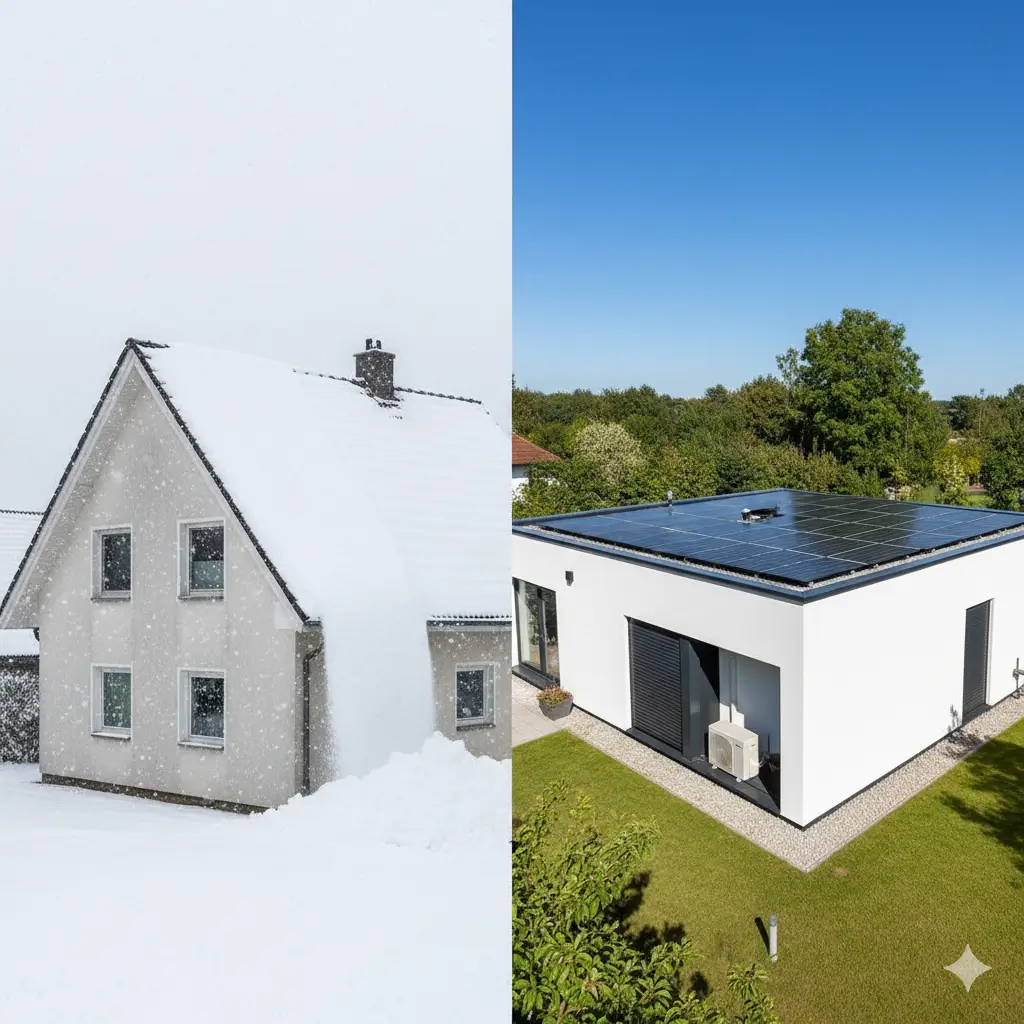
Neither type of roof is inherently better; the choice depends on the climate and priorities. A sloped (gable) roof is better for shedding water and snow, which is ideal in areas with heavy rain or snow, while a flat roof can be more energy-efficient and provides easier access for maintenance and installation of features like solar panels.
Sloped (gable) roof

Pros:
- Superior water and snow drainage: The slope allows precipitation to run off naturally, reducing the risk of leaks and structural damage from pooling water or heavy snow accumulation.
- Lower maintenance in wet climates: Because water drains away easily, they typically require less proactive maintenance for water issues than flat roofs.
- Stronger in high winds: A well-built gable roof can be more resistant to high winds than other designs.
Cons:
- Higher cost and complexity: They are often more expensive upfront due to more materials and labor.
- Difficult to walk on: Maintenance and repairs can be challenging and often require professional help.
- Less design flexibility: They are not ideal for adding rooftop gardens or other outdoor spaces.
Flat sloped roof
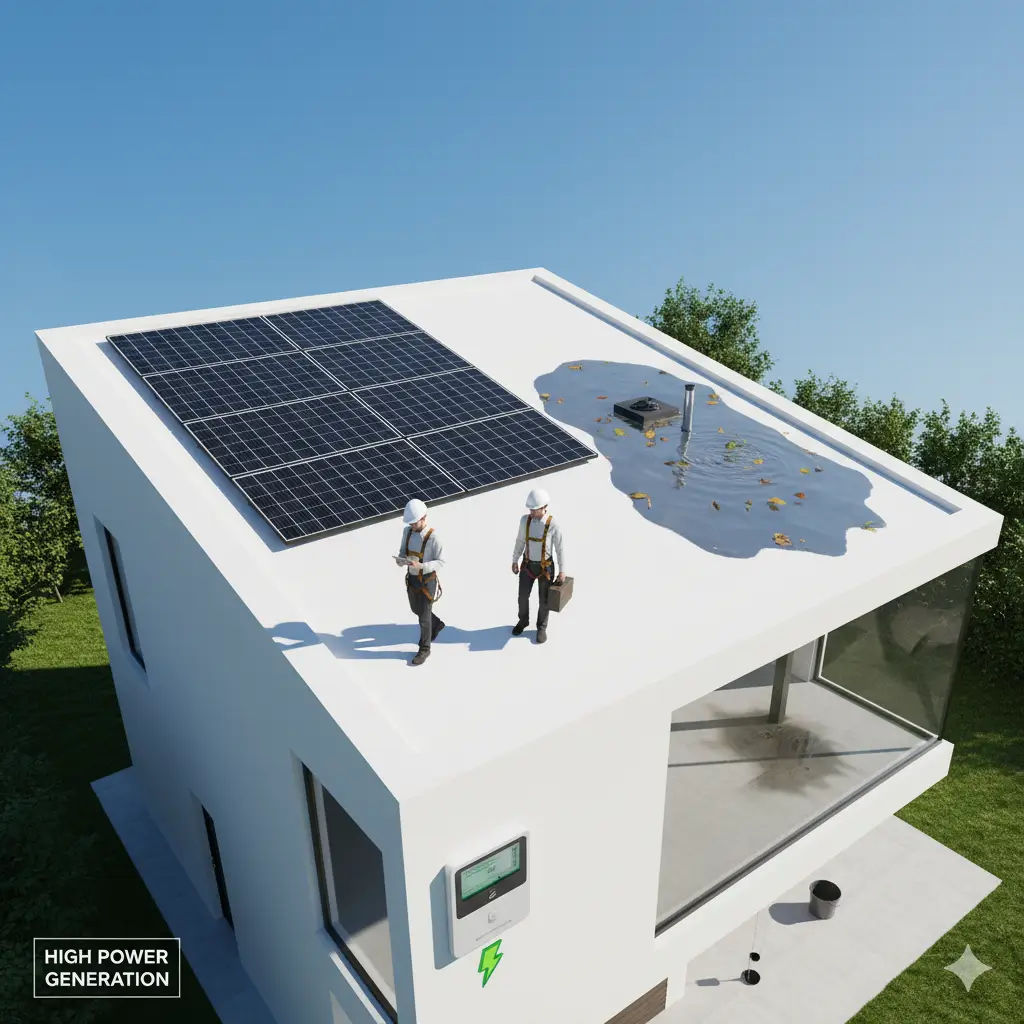
Pros:
- Easier access: The level surface makes it easier to walk on for repairs, inspections, or maintenance.
- Energy efficiency: They can be more energy-efficient because insulation is often installed in a continuous layer on top, which can lower heating and cooling costs.
- Cost-effective and faster installation: They are often cheaper to build and install, especially on smaller structures.
- Ideal for solar panels: The single, large surface area is perfect for installing solar panels, which can receive more direct sunlight.
Cons:
- Poor drainage: If not installed with a slight slope and proper drainage, they can be prone to leaks from standing water.
- Higher risk of leaks and water damage: Without proper maintenance, flat roofs are more likely to develop leaks.
- Higher maintenance frequency: They require more proactive and frequent maintenance to prevent clogs and water buildup.