
Do You Need a Lightning Rod With a Metal Roof? (Complete Guide)
Short Answer
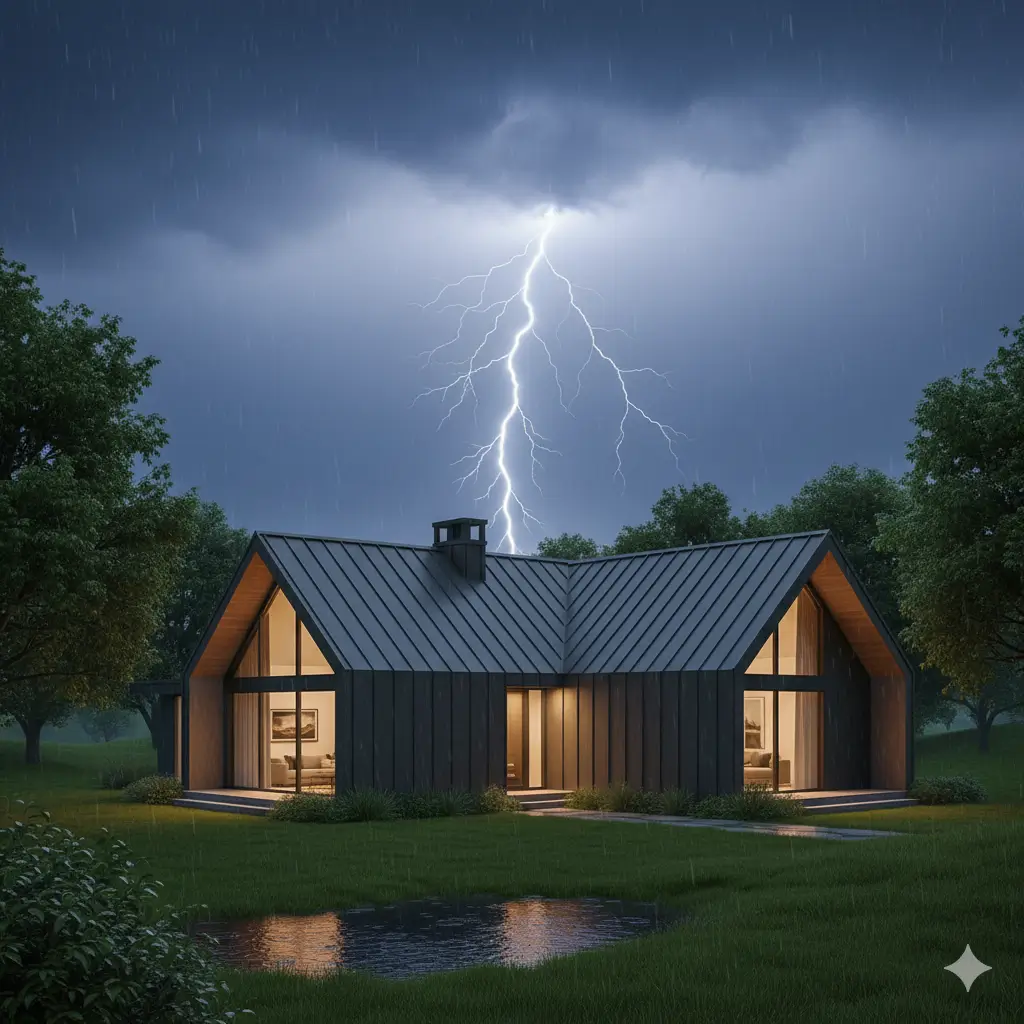
For most homes, you do not need a lightning rod with a metal roof. Metal roofing does not attract lightning, and its non-combustible surface makes it one of the safest roofing materials during a lightning strike.
However, a lightning protection system may be recommended if your home is tall, isolated, or located in a region with frequent lightning activity.
Why Metal Roofs Are Naturally Safe in Lightning Storms
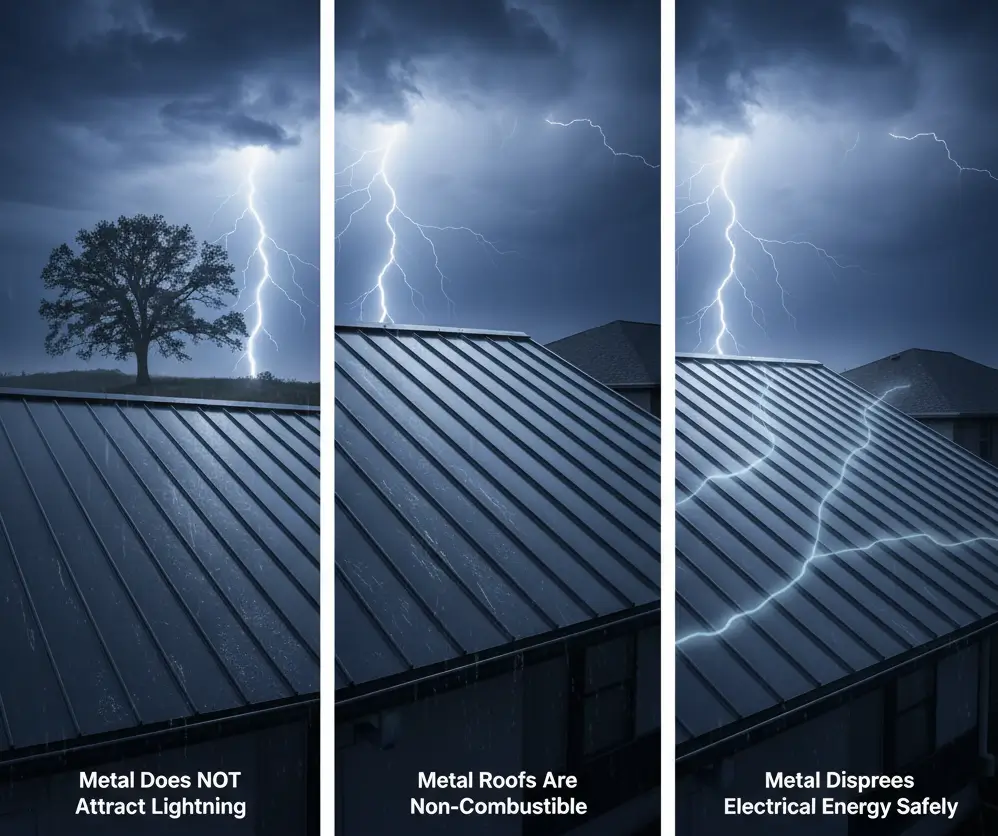
1. Metal Does NOT Attract Lightning
A common misconception is that lightning seeks out metal. In reality, lightning is drawn to the tallest point, not the material. A metal roof is no more likely to be struck than asphalt, tile, or wood.
2. Metal Roofs Are Non-Combustible
Metal is fire-resistant and has a Class A fire rating in most installations.
If lightning strikes your home, a metal roof will not ignite, which significantly lowers the risk of fire compared to combustible materials like wood shingles.
3. Metal Disperses Electrical Energy Safely
If a strike occurs, the metal surface helps spread the electrical charge across a wide area, reducing concentrated damage and allowing the energy to pass harmlessly into the ground (especially when the home’s grounding system is up to code).
Do Metal Roofs Increase Lightning Risk?
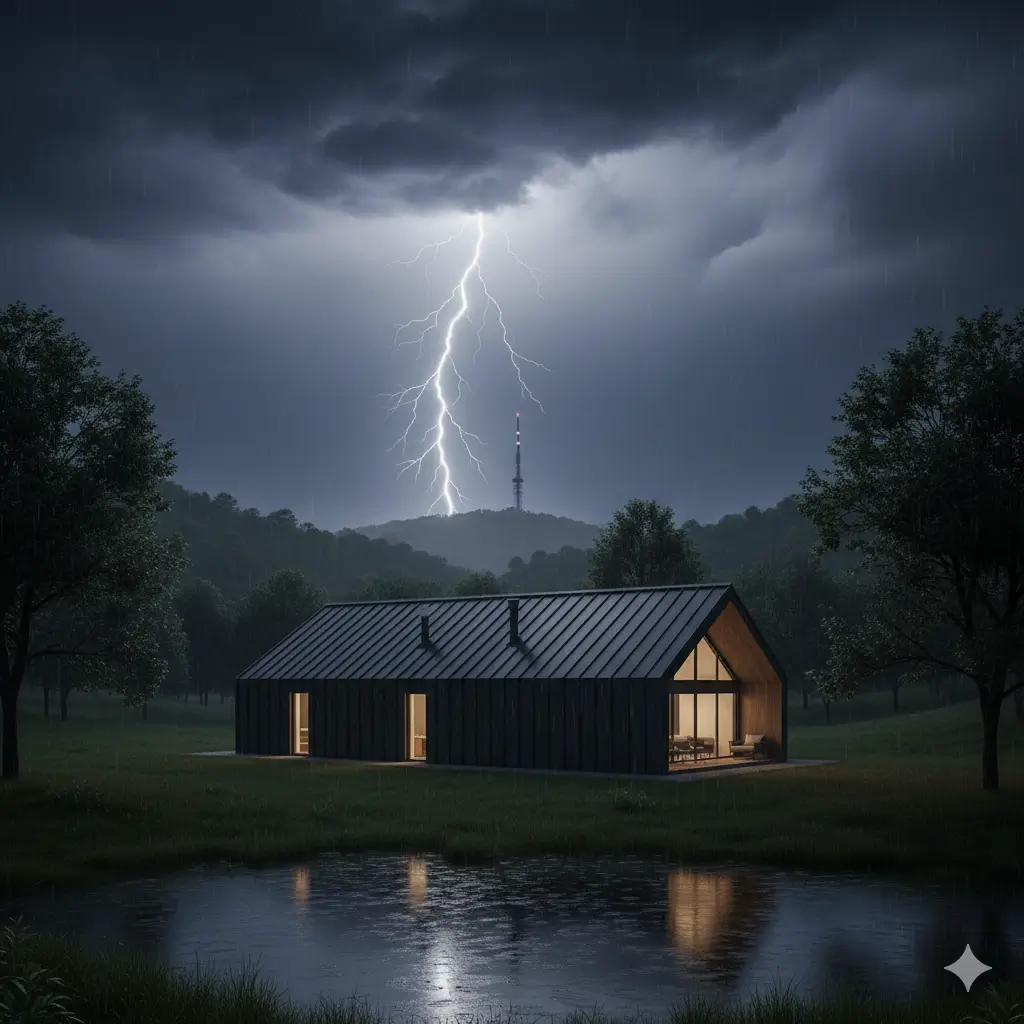
No. Metal roofs do not increase the likelihood of a lightning strike. Height, location, and surrounding terrain are the determining factors.
When You Might Need a Lightning Rod
While most homes don’t require lightning rods, they can be beneficial if:
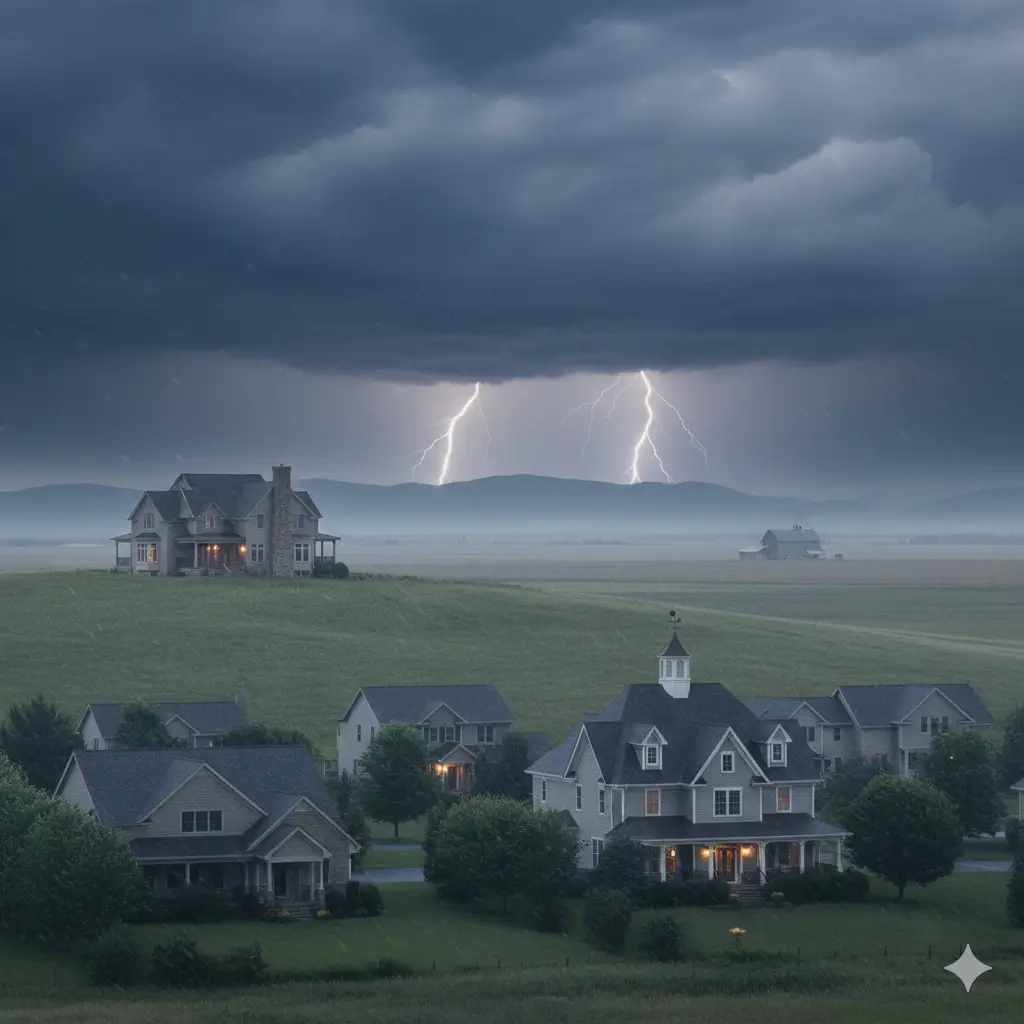
1. Your Home Is in an Exposed Location
You should consider adding protection if your home is:
- On a hill, ridge, or high elevation
- The tallest structure in the surrounding area
In a flat, open field with few tall objects around
2. You Live in a High-Lightning Region
Some regions experience significantly more lightning activity. Homes in these areas may benefit from lightning protection.
3. Your Home Has a Complex, Tall, or Large Roof Structure
Tall chimneys, roof peaks, cupolas, and large metal-roofed buildings can sometimes justify lightning rods for extra safety.
4. You Want Additional Peace of Mind
Even if your home isn’t in a high-risk area, some homeowners prefer lightning rods for reassurance—especially if they own expensive electronics, solar installations, or sensitive equipment.
Myths and Misconceptions About Metal Roofs and Lightning
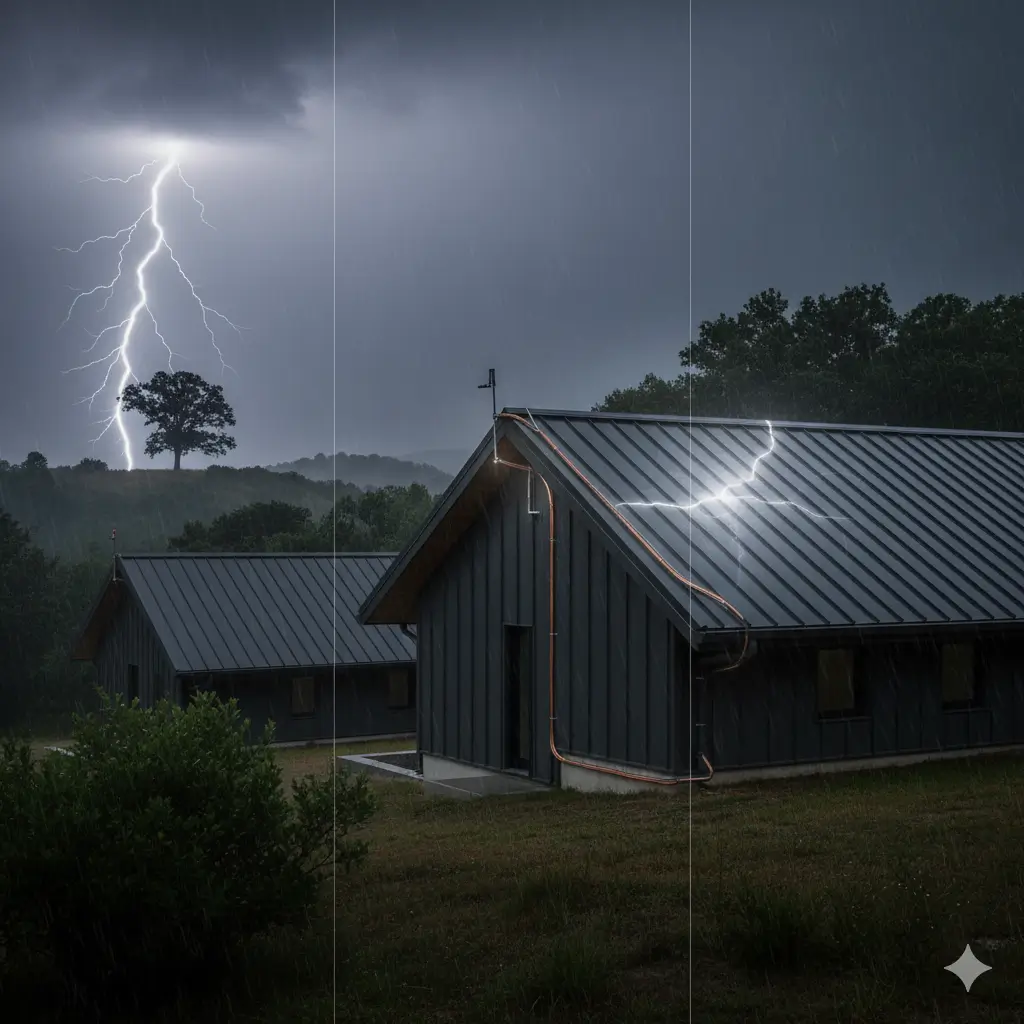
Myth 1: “Metal roofs attract lightning.”
Reality: Lightning hits the tallest nearby object, not the material.
Myth 2: “Lightning rods stop lightning from striking.”
Reality: Lightning rods don’t prevent strikes—they redirect electrical energy safely into the ground.
Myth 3: “Lightning will melt or destroy a metal roof.”
Reality: Metal roofs can withstand lightning without severe damage. Most damage occurs to systems inside the home, not the roof surface.
FAQs
Damage is rare. If it occurs, it’s usually minor, such as discoloration or a small puncture. Internal electrical systems are more vulnerable.
Yes. Metal is fire-resistant and disperses lightning energy, making it safer than wood or asphalt shingles.
Yes. Lightning rods are fully compatible with metal roofs and can be professionally installed without compromising the roof’s integrity.
Basic systems often range from $1,500–$3,000 for an average home, depending on size and complexity.
For most homes, yes. But your local risk factors determine whether additional protection is recommended.