
How Much Does Roof Replacement Cost in 2025? (New Roof Cost Guide for Homeowners)
Table of Contents

Roof replacement costs in 2025 range between $5,800 and $14,000 for most U.S. homes, with the national average sitting around $9,500. The total price of a new roof depends on key factors such as roof size, material type, labor rates, and your location. Premium roofing options like metal, slate, or clay tiles can significantly increase the cost, while asphalt shingles remain the most budget-friendly choice.
Whether you’re replacing an aging roof or installing a brand-new one, understanding how roofing costs are calculated helps you plan your budget confidently and avoid surprise expenses. In this guide, we’ll break down average roof replacement costs by material, size, and region, plus offer tips to save money without compromising quality.
Main Points — Roof Replacement Cost Overview for 2025
Average Cost: Most homeowners spend between $5,800 and $14,000 for a full roof replacement in 2025, depending on size, slope, and material.
Cost per Square Foot: Expect to pay around $4 to $11 per sq. ft., including both materials and labor.
Material Prices:
- Asphalt shingles – $4 to $7 per sq. ft. (most common & budget-friendly)
- Metal roofing – $8 to $15 per sq. ft.
- Tile or Slate – $10 to $25 per sq. ft., ideal for long-term durability
Labor Costs: Roofing contractors generally charge 15% – 25% of the total project price, or about $40 to $90 per hour, depending on region and roof complexity.
Return on Investment (ROI): A properly installed new roof can deliver an ROI of 20% to 50%, boosting curb appeal and resale value.
Insurance Coverage: Standard homeowner policies usually cover roof replacement only for storm, fire, or impact damage, not for age or wear-and-tear—always check your policy before filing a claim.
Home Type Impact: Two-story homes often cost less per square foot to reroof than single-story houses due to smaller roof areas and easier access to lower pitches.
Roof Replacement Cost Guide (By Square Footage)

The cost of a roof replacement in 2025 depends heavily on your home’s total roof size and pitch. On average, most homeowners pay between $4 and $11 per square foot, including both materials and labor. Since the average home roof spans 1,500 to 2,000 square feet, a complete replacement usually falls between $6,000 and $22,000.
Keep in mind: roofs with steeper slopes, multiple levels, or complex designs have more surface area and require additional labor and materials, which can raise the overall price.
Roof Replacement Cost Guide (By Square Footage)
| Roof Size (sq. ft.) | Estimated Cost Range |
|---|---|
|
1,000 sq. ft. |
$4,000 – $11,000 |
|
1,200 sq. ft. |
$4,800 – $13,200 |
|
1,500 sq. ft. |
$6,000 – $16,500 |
|
1,800 sq. ft. |
$7,500 – $19,800 |
|
2,000 sq. ft. |
$8,800 – $22,000 |
|
2,500 sq. ft. |
$10,500 – $27,500 |
|
3,000 sq. ft. |
$12,000 – $33,000 |
|
3,500 sq. ft. |
$14,000 – $38,500 |
Pro Tip:
To get the most accurate estimate, multiply your roof’s square footage by your chosen material’s per-square-foot rate (including labor). For example, a 2,000 sq. ft. roof using mid-range architectural shingles at $6 per sq. ft. would cost about $12,000 total.
Roofing Costs by Material Type

When planning a roof replacement, one of the most important decisions you’ll make is choosing the right roofing material. The type of material you select not only affects the total installation cost but also influences your roof’s durability, maintenance needs, energy efficiency, and curb appeal.
While asphalt shingles remain the most common and affordable choice for U.S. homes, alternatives such as metal, tile, wood, or slate offer unique aesthetics and longer lifespans. Below is a breakdown of average roof replacement costs by material to help you choose the best option for your home and budget.
| Roofing Material | Average Cost per Sq. Ft. (Installed) | Estimated Cost for 1,800 sq. ft. Roof | Average Lifespan | Key Features & Considerations |
|---|---|---|---|---|
|
Asphalt Shingles |
$4 – $8 |
$7,000 – $15,000 |
15 – 25 years |
Most popular and budget-friendly option. Easy installation, good variety of colors, moderate durability. |
|
Architectural Shingles |
$6 – $10 |
$10,000 – $18,000 |
25 – 30 years |
Thicker, more dimensional version of asphalt. Better wind resistance and lifespan. |
|
Metal Roofing (Steel or Aluminum) |
$6 – $16 |
$11,000 – $25,000 |
40 – 70 years |
Excellent durability and energy efficiency. Resistant to rot, insects, and fire. |
|
Wood Shingles or Shakes |
$6 – $15 |
$12,000 – $27,000 |
30 – 50 years |
Natural, rustic look. Requires regular maintenance to prevent rot and moss growth. |
|
Clay or Concrete Tile |
$10 – $20 |
$18,000 – $35,000 |
50 – 100 years |
Classic, high-end appearance. Heavy material—may require structural reinforcement. |
|
Slate Tile |
$15 – $30 |
$25,000 – $45,000 |
75 – 200 years |
Extremely durable and elegant. One of the most expensive materials. Ideal for luxury homes. |
|
$7 – $14 |
$12,000 – $25,000 |
25 – 50 years |
Designed to mimic natural materials (slate, cedar). Lightweight and low maintenance. |
Choosing the Right Roofing Material
When deciding which roofing material is right for your home, consider the following factors:
- Budget: Asphalt shingles are cost-effective, while slate and metal roofs offer long-term value despite higher upfront costs.
- Climate: Metal and tile roofs perform well in extreme weather conditions, while wood may not be ideal in humid or wildfire-prone regions.
- Aesthetic Preference: Wood and slate add a timeless, natural charm; metal and architectural shingles offer a modern, sleek look.
- Maintenance: Asphalt and synthetic options require minimal upkeep, whereas wood and slate need periodic maintenance.
- Longevity: Investing in higher-end materials can extend your roof’s lifespan and reduce replacement frequency.
Expert Tip
If you plan to stay in your home for decades, choosing a durable material like metal, slate, or tile can be more cost-effective over time due to reduced maintenance and fewer replacements.
Roofing Professional Pricing (2025 Update)
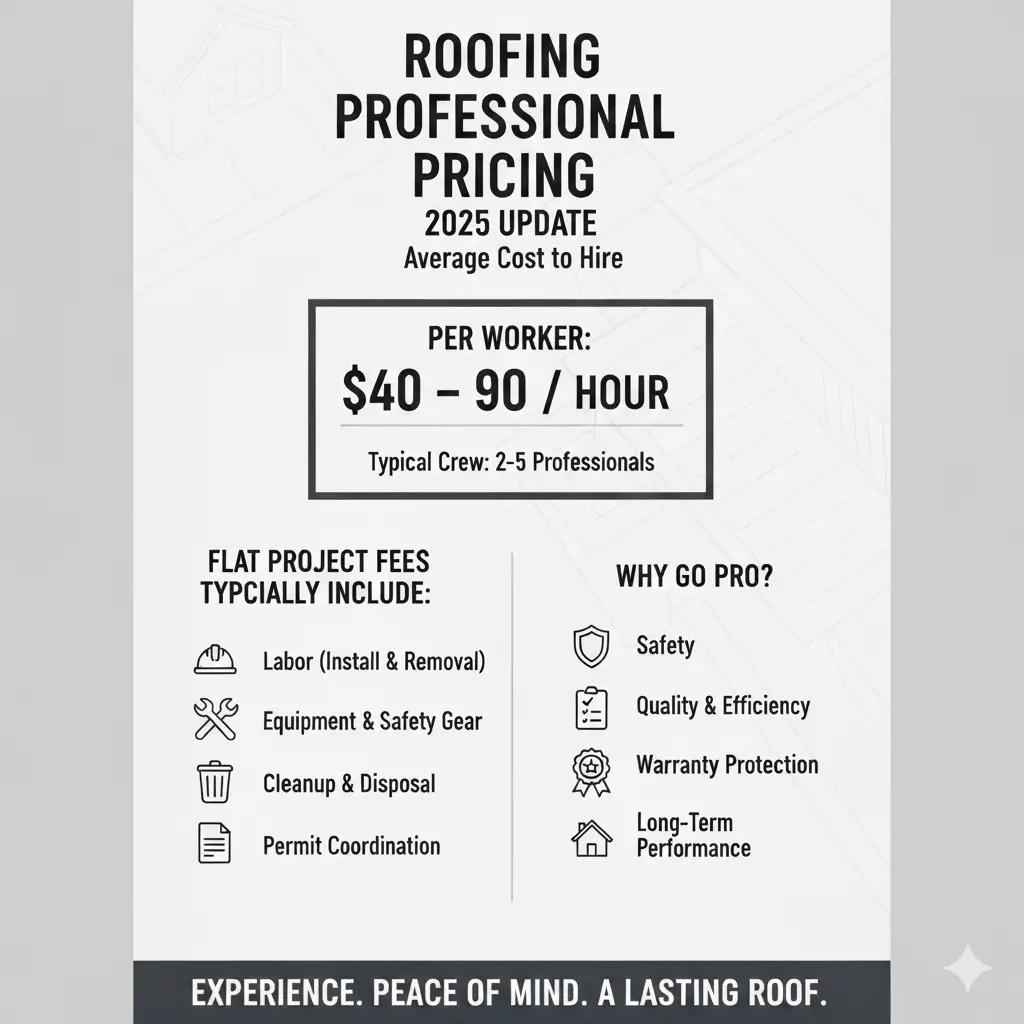
When it comes to roof replacement or major repairs, hiring an experienced roofing professional ensures the job is done safely, efficiently, and according to local building codes. While DIY projects may seem cheaper at first, roofing is a specialized trade that requires proper tools, training, and safety equipment. A professional installation also protects your warranty and improves the long-term performance of your roof.
Average Cost to Hire Roofing Professionals
In 2025, homeowners can expect to pay between $40 and $90 per hour per worker for roof replacement or major roof work. Most roofing crews include two to five professionals, depending on the size and complexity of the project.
For full roof replacements, contractors often charge flat, project-based fees rather than hourly rates, especially for large or complex jobs. These fees typically include:
- Labor costs for removal and installation
- Equipment and safety gear
- Cleanup and debris disposal
- Permit handling and inspection coordination (if applicable)
Average Labor Cost Range (2025):
- Small roofs (under 1,200 sq. ft.): $2,500 – $5,000
- Medium roofs (1,500 – 2,000 sq. ft.): $4,500 – $9,000
Large roofs (2,500+ sq. ft.): $7,500 – $15,000+
General Contractor Cost Guide (2025)
Hiring a general contractor for your roofing or remodeling project ensures expert coordination, proper permits, and smooth execution from start to finish. General contractors oversee every aspect of the project—from sourcing materials and managing subcontractors to ensuring your roof meets all local building codes.
Average General Contractor Costs in 2025
In 2025, most general contractors charge either a percentage-based project fee or an hourly rate, depending on the scope and complexity of the job.
- Project-Based Fees: Typically 15% to 25% of the total project cost
- Hourly Rates: Range between $90 and $400 per hour, based on experience, project type, and demand in your area
For example, if your roof replacement costs $10,000, you can expect to pay $1,500 to $2,500 as the contractor’s management fee.
Roof Replacement Cost Guide by Location (2025)
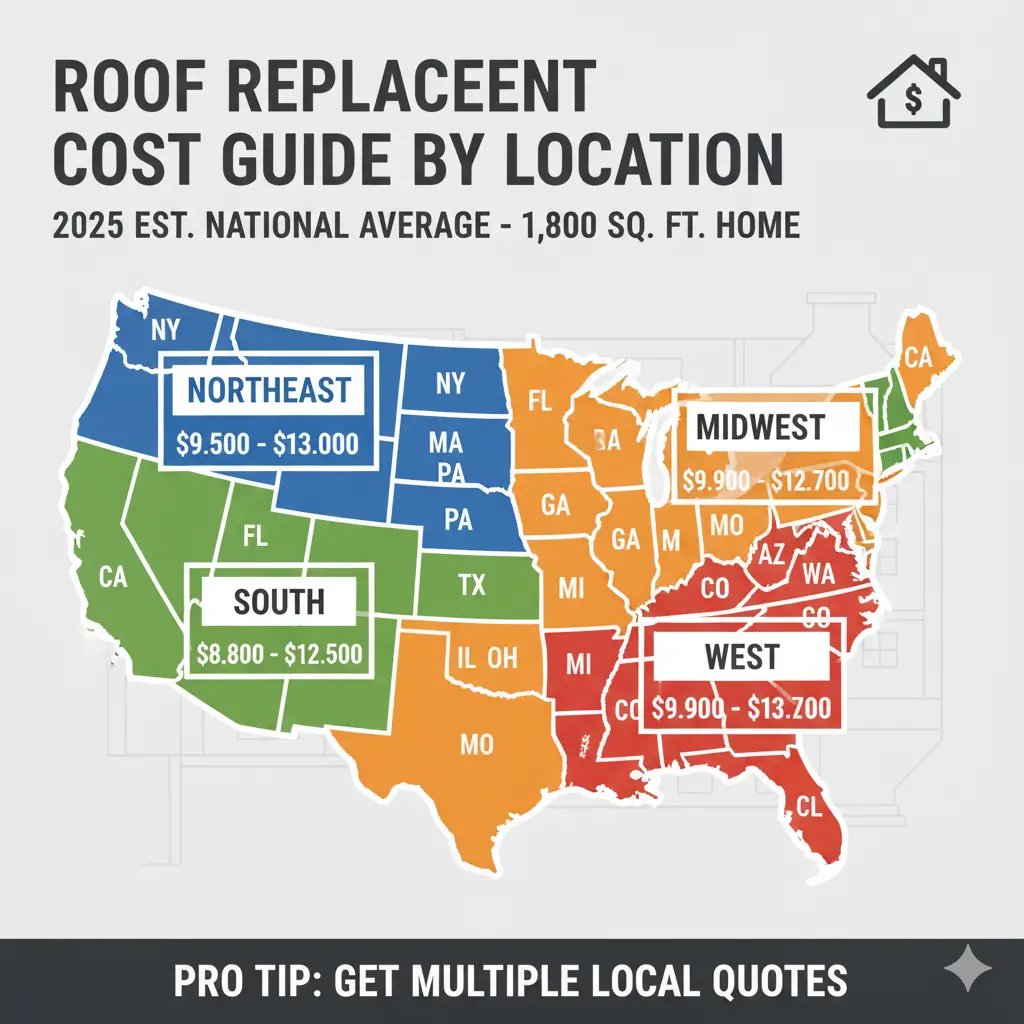
Your roof replacement cost can vary significantly depending on where you live. Local labor rates, climate conditions, and regional material availability all play key roles in determining your final price. Homeowners in urban or coastal areas—where the cost of living and demand for skilled labor are higher—can expect to pay more than those in smaller towns or rural regions.
Average Roof Replacement Cost by Region (for a 1,800 Sq. Ft. Home)
| Region | Average Cost Range |
|---|---|
|
Northeast (e.g., NY, NJ, MA) |
$9,500 – $13,000 |
|
South (e.g., FL, TX, GA) |
$8,800 – $12,500 |
|
Midwest (e.g., IL, OH, MI) |
$8,900 – $12,700 |
|
West (e.g., CA, AZ, WA) |
$9,000 – $13,200 |
Note: Coastal states like New York and California typically have higher roofing costs due to strict building codes, unionized labor, and weather-resistant material requirements.
Pro Tip:
Before scheduling a roof replacement, request multiple quotes from local roofing contractors. This not only helps you find a competitive rate but also ensures compliance with city-specific regulations and warranty standards.
How Various Factors Affect Roof Replacement Pricing

Replacing a roof involves more than just material costs. From the size and slope of your roof to local labor rates and seasonal conditions, multiple factors combine to determine the total roof replacement cost. Understanding each of these can help you plan a realistic budget and avoid unexpected expenses.
Roof Size and Square Footage
The total area of your roof is one of the biggest cost drivers. A larger roof requires more materials, longer installation times, and additional labor — all of which increase the final price.
Roofing contractors typically charge per roofing square (100 square feet), with average costs ranging between $4 and $11 per square foot depending on the material.
A standard 1,800 sq. ft. roof in New York, for example, may cost anywhere from $8,000 to $22,000, depending on its design and finish.
Roof Pitch and Complexity
Your roof’s pitch (slope) and complexity greatly affect labor costs.
- Steep or multi-level roofs are harder and more dangerous to work on, requiring additional safety equipment and time.
- Complex roofs with multiple valleys, hips, or dormers take longer to install and generate more waste material.
In general, the steeper or more intricate your roof, the higher the installation and labor costs.
Roofing Materials
Material choice has the largest impact on total roof replacement cost.
Common options include:
- Asphalt shingles: $4–$8 per sq. ft. (affordable, but shorter lifespan)
- Metal roofing: $7–$25 per sq. ft. (durable, energy-efficient)
- Cedar shakes or wood shingles: $6–$15 per sq. ft. (natural look, moderate maintenance)
- Slate or clay tile: $12–$30 per sq. ft. (luxury aesthetic, high durability)
- Flat roof materials (PVC, rubber, bitumen): $3–$12 per sq. ft.
Higher-end materials may last two to three times longer, offsetting their initial cost with long-term value and reduced maintenance.
Labor Costs and Contractor Rates
Labor typically makes up 40%–60% of your total roofing cost.
Rates vary based on your location, contractor’s experience, and roof complexity. In cities like New York, skilled roofers often charge $40–$90 per hour, and licensed contractors may apply 15%–25% project management fees.
Hiring an experienced roofing professional ensures quality workmanship and compliance with building codes.
Demolition and Preparation
Before a new roof can be installed, the old roofing materials must be removed. Tear-off labor and disposal (dump) fees can add $1,000–$2,000 to the project, depending on how many layers need to be removed.
If any decking or structural damage is uncovered, repair costs will increase. Proper site cleanup and waste disposal are also factored into the total price.
Permits and Regulations
In New York City and most surrounding areas, you’ll need a roofing permit before work begins. Permit and inspection fees typically range from $200 to $500, depending on the scope of work and local regulations.
Certain neighborhoods or HOAs may also restrict material choices or require additional documentation.
Inspections and Assessments
Professional roof inspections are essential before and after installation to identify structural issues and ensure compliance.
- Pre-installation inspections help estimate accurate costs and detect hidden damage.
- Post-installation inspections verify that the roof meets all quality and safety standards.
Inspection fees usually fall between $150 and $400, but some contractors include them in the project estimate.
Warranty and Insurance
Roofing warranties and insurance coverage can influence upfront and long-term costs.
- Manufacturer warranties typically cover material defects for 20–50 years.
Contractor warranties cover installation quality for 5–10 years.
Always confirm that your roofer carries liability insurance and workers’ compensation, which protect you from potential claims or damages.
Accessibility and Location
If your home is difficult to access—due to landscaping, fencing, or limited driveway space—contractors may charge extra for equipment setup and material transport.
Additionally, your geographic location affects pricing through variations in labor rates, local demand, and climate conditions that dictate material selection.
Timing and Seasonality
Roofing prices fluctuate throughout the year.
- Spring and summer are peak seasons with higher labor demand and costs.
Late fall or winter installations may be more affordable but risk delays due to weather.
Scheduling during the shoulder seasons (early spring or late fall) often provides the best balance between cost and convenience.
Additional Considerations
Unforeseen issues can increase your project cost, including:
- Hidden structural damage, rot, or mold under the decking
- Extra ventilation, skylights, or insulation upgrades
- Specialized flashing or drainage work
Always allow a 10–15% contingency budget to cover unexpected expenses during your roof replacement.
Expert Insight
“When you notice consistent shingle loss after storms or visible signs of curling, cracking, or missing materials, your roof is signaling that it’s nearing the end of its service life,” explains Ali, Senior Roofing Specialist at Toor Construction in New York.
“Many homeowners try patch repairs to save money, but once a roof starts failing in multiple areas, replacement is often the smarter long-term investment. A new roof not only restores full weather protection but can also improve energy efficiency and home value.”
DIY Roof Replacement vs. Professional Roofing Services (2025 Update)
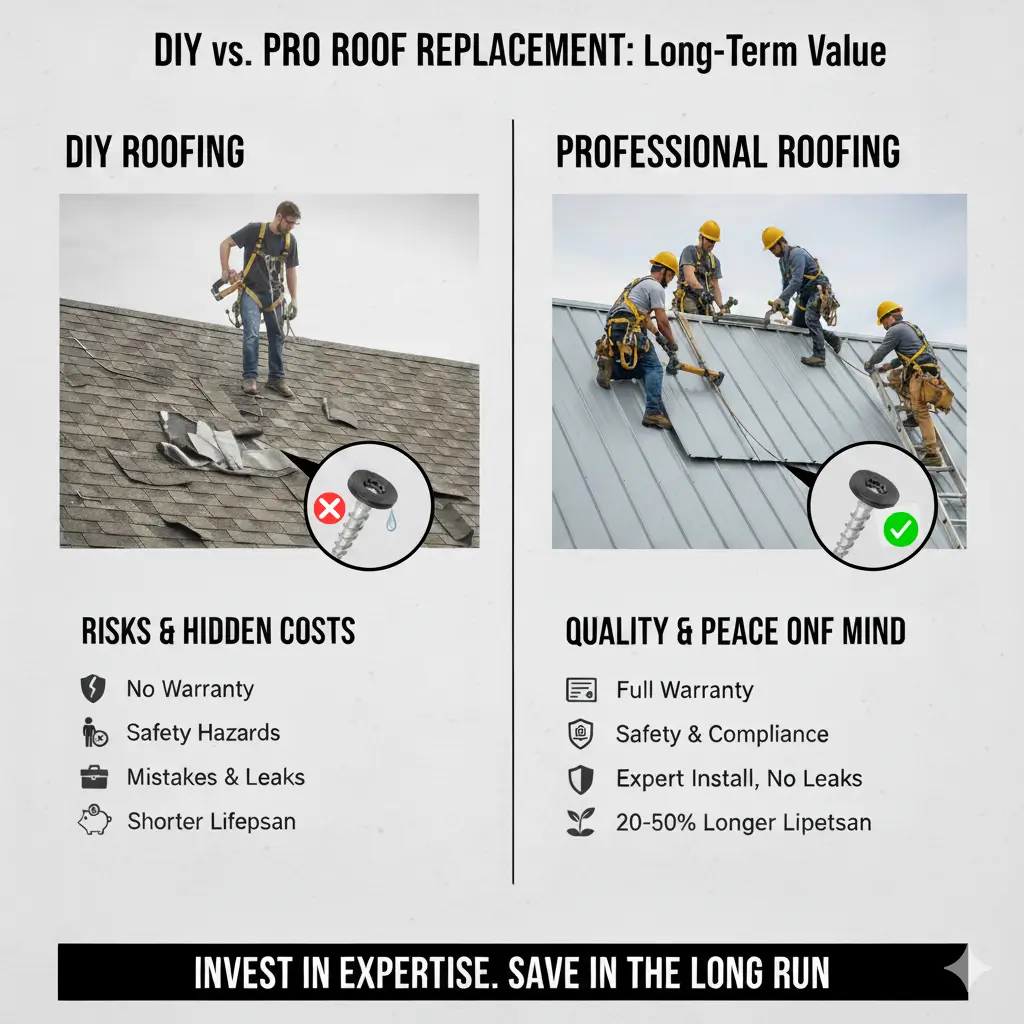
While DIY roofing may seem like a cost-saving shortcut, it often leads to far greater expenses—and risks—over time. Replacing a roof requires technical precision, safety equipment, and deep knowledge of materials and structural systems. A small mistake during installation can cause leaks, insulation problems, or even structural damage that costs thousands to fix later.
If you’re replacing an asphalt shingle roof yourself, you might save on labor initially—but you’ll lose the professional warranties, quality assurance, and liability coverage that licensed contractors provide. Moreover, many roofing manufacturers void their product warranty if the installation isn’t completed by a certified roofer.
Professional roofing contractors bring specialized tools, trained crews, and safety protocols to every project. They also ensure compliance with NYC building codes, permits, and insurance requirements, protecting you from costly violations or legal issues.
Expert Tip: Always consider the long-term value. A professionally installed roof can last 20–50% longer than a DIY job and offers greater protection against leaks, energy loss, and weather damage.
Roof Replacement vs. Repair: Complete Homeowner’s Guide (2025)
When roof problems arise, homeowners often face a tough choice — repair the damage or replace the entire roof. While minor leaks or missing shingles may only require localized repairs, there are times when a full replacement is the smarter, long-term investment. Understanding the difference helps you make the most cost-effective and durable decision for your home.
When Roof Repair Is the Right Choice
Roof repairs are best for localized damage or minor wear that doesn’t affect the overall structure. Examples include:
- A few missing or cracked shingles
- Small leaks around flashing or vents
- Isolated storm damage
Repairs can extend the life of your roof without the expense of full replacement. However, keep in mind that patching older roofs may lead to color mismatches and uneven wear over time.
When Roof Replacement Is the Better Option
If more than 30–50% of your roof is damaged—or your roofing system is nearing the end of its lifespan—it’s often more economical to replace the entire roof. A full replacement ensures:
- Uniform color and texture across the roof
- New underlayment and flashing to prevent hidden leaks
- Long-term savings on repeated repair costs
A full roof replacement also gives you the chance to upgrade to energy-efficient materials or improved insulation, enhancing both property value and energy performance.
Cost Consideration: The 50% Rule
Roofing experts often recommend the “50% rule”:
If repair costs exceed half the price of a full replacement, it’s more cost-effective to replace the roof entirely.
Partial replacements are an option, but because of fixed costs like permits, removal, and setup, the price per square foot tends to be higher compared to a complete replacement.
Quick Comparison
| Factor | Roof Repair | Roof Replacement |
|---|---|---|
|
Scope |
Fixes small, localized issues |
Full roof system renewal |
|
Cost |
Lower upfront |
Higher upfront, long-term value |
|
Lifespan Extension |
1–5 years |
20–50 years, depending on the material |
|
Warranty |
Limited |
Full manufacturer and contractor warranties |
|
Best For |
Minor leaks, small damage |
Aging or severely damaged roofs |
Expert Insight:
“If repairs start adding up to nearly half the replacement cost, it’s time to invest in a new roof. You’ll save money in the long run and improve your home’s overall protection.”
— Certified Roofing Consultant, NYC (2025)
How to Reduce Costs When Replacing a Roof (2025 Guide)
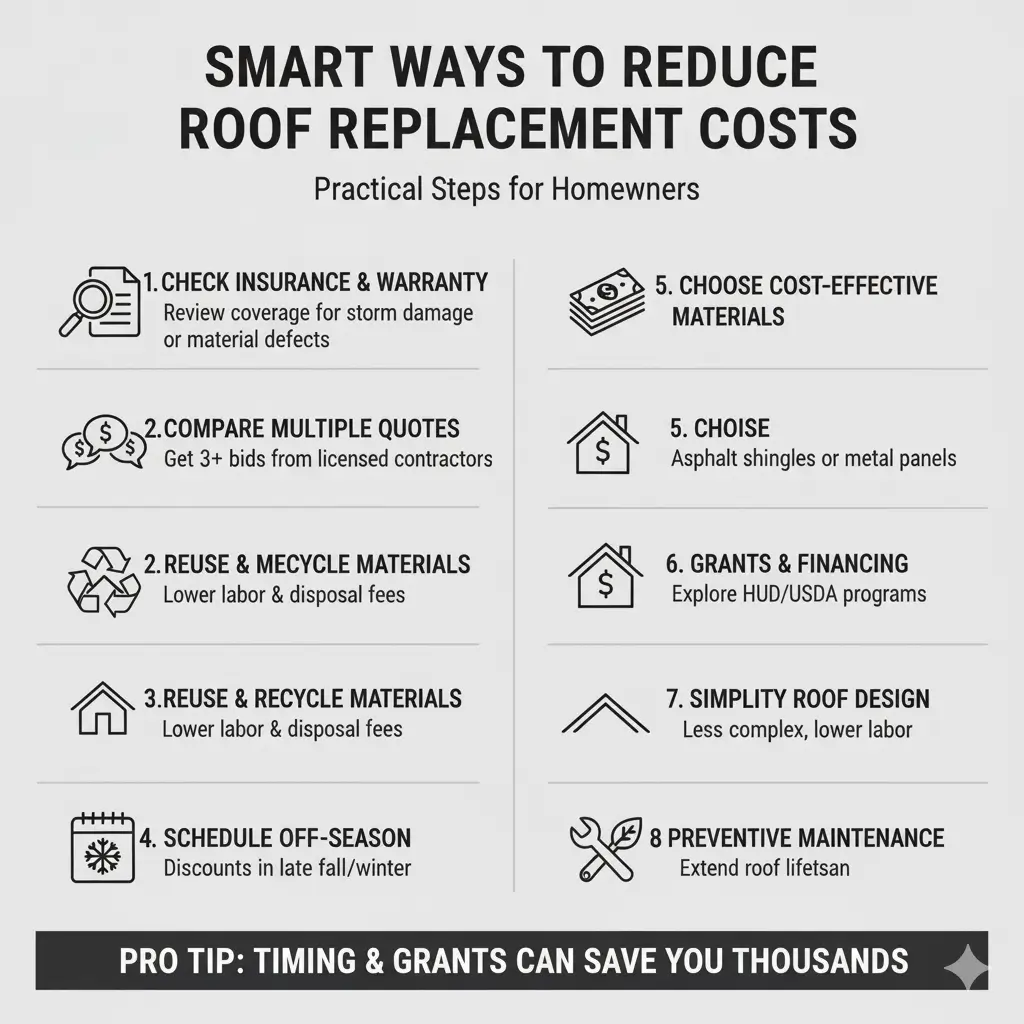
Replacing a roof is a major investment, but that doesn’t mean you can’t take smart steps to lower your total expenses. From strategic planning to material selection, there are several ways to save money without compromising quality, safety, or durability. Below are expert-recommended ways to cut costs on your roof replacement project.
1. Review Insurance and Warranty Coverage
Before committing to full replacement costs, check whether your homeowner’s insurance covers part of the project—especially if the damage resulted from storms, fallen trees, or other covered events.
Also, review your manufacturer or contractor warranties, as they may cover defects or certain repair costs that reduce your out-of-pocket expense.
2. Compare Multiple Contractor Quotes
Don’t settle for the first estimate. Request quotes from at least three licensed roofing contractors to compare labor rates, materials, and project timelines.
When evaluating bids, focus on value and reputation rather than the lowest price—poor workmanship can cost more in future repairs.
3. Reuse or Recycle Existing Materials
Ask your contractor if existing components such as underlayment, flashing, or roof decking can be reused safely. While not always possible, reusing materials can lower both labor and disposal costs.
If complete reuse isn’t feasible, consider recycling shingles or metal roofing to offset disposal fees and reduce environmental impact.
4. Schedule Work During the Off-Season
Roofing demand peaks in spring and fall, leading to higher labor rates and longer wait times.
If the weather allows, schedule your project during the off-season—late fall or winter—when contractors often offer discounted pricing to keep crews busy.
5. Choose Cost-Effective Roofing Materials
While premium materials like slate and copper look stunning, they come at a premium cost. Consider high-quality asphalt shingles or metal panels for a balance of durability, aesthetics, and affordability.
Energy-efficient materials may also qualify for local or federal rebates, helping you save over the long term.
6. Apply for Home Improvement Grants or Financing
Explore federal and state programs such as those offered by the U.S. Department of Housing and Urban Development (HUD) or the U.S. Department of Agriculture (USDA) for qualified home repair grants or low-interest financing.
These programs can significantly reduce your upfront costs, especially for low- to moderate-income homeowners.
7. Simplify Roof Design and Scope
The more complex your roof design (multiple slopes, dormers, or skylights), the more time and labor your project will require. If you’re open to design adjustments, simplifying roof structure or minimizing decorative add-ons can substantially reduce replacement costs.
8. Preventive Maintenance Pays Off
The best way to save money on a roof replacement is to extend your current roof’s lifespan.
Regular inspections, cleaning gutters, and repairing minor leaks early can prevent larger issues that lead to full replacement sooner than necessary.
Pro Tip:
“Timing your project strategically and understanding what your insurance or local programs can cover can save you thousands on a roof replacement—without cutting corners on quality.”
— Certified Roofing Consultant, NYC (2025)
How We Collect and Calculate Roofing Cost Data
At Toor Construction, we believe transparency builds trust — especially when it comes to something as important as your roofing investment. Our roofing cost estimates are based on a combination of industry-standard data, real-world contractor pricing, and regional market insights to ensure homeowners get the most accurate and realistic figures possible.
1. Key Factors Behind Roofing Cost Estimates
We calculate roofing costs based on several essential variables that directly influence project pricing:
- Home size and roof area: Larger homes naturally require more materials and labor. We estimate total roof area using common architectural ratios and roof slopes.
- Roof pitch and design complexity: A steeper or more complex roof increases material usage and installation difficulty.
- Material type: Costs differ significantly between asphalt shingles, metal, tile, slate, and flat roofing systems.
- Location and labor rates: Prices vary across NYC boroughs and surrounding areas due to regional labor costs, permit fees, and material availability.
2. Our Data Sources and Methodology
To create fair and consistent cost estimates, we use a combination of:
- Industry pricing databases: We reference RSMeans data from Gordian, a nationally recognized construction cost database trusted by contractors and estimators.
- Supplier price lists: Material costs are verified through local distributors and national suppliers to reflect current market rates.
- Real project data: We incorporate average pricing and labor trends from completed roofing projects throughout New York City, ensuring our figures reflect real-world conditions.
3. Standardized Roofing Calculations
Roofing measurements are expressed in “squares,” the industry term for 100 square feet of roofing area. Using this standard, we calculate the total roof area based on typical architectural models, including:
- A 6/12 pitch (6 inches of rise for every 12 inches of run).
- 1-foot overhangs to account for eaves and edges.
This method aligns with how professional roofers estimate and purchase materials.
4. Why Actual Costs May Vary
While our cost breakdowns provide reliable benchmarks, every property is unique. Your final price may differ based on factors like:
- Structural repairs or decking replacement needs
- Accessibility and safety requirements
- Seasonal labor demand or material availability
That’s why we always recommend getting at least two on-site quotes from reputable, licensed roofing contractors in your area for the most accurate estimate.
Frequently Asked Questions (FAQs)
The lifespan of a new roof depends on the material, installation quality, and maintenance.
- Asphalt shingles: 15–30 years (most common and cost-effective).
- Metal roofing: 30–60 years with proper care.
- Clay or concrete tiles: 50–100 years, and are highly durable.
Slate roofing: 75–150 years, offering unmatched longevity.
Factors like New York’s weather, roof slope, and ventilation can also impact lifespan.
Also Read:
Yes — a warranty provides long-term protection and peace of mind.
Most new roofs come with a manufacturer’s limited warranty that covers defects in materials. However, you can also purchase an extended or contractor-backed warranty, typically ranging from $500 to $5,000, depending on the roof size, materials, and duration.
Before buying, always check what’s covered (and what’s not) — for example, some warranties exclude storm damage or improper installation.
While it’s not mandatory, replacing your gutters along with the roof can be a smart move — especially if your existing gutters are old, rusting, or poorly aligned. Replacing both systems together ensures seamless installation, prevents leaks, and often saves on labor costs.
All quality roofing materials can enhance curb appeal and home value, but your return on investment (ROI) depends on your local market and the material you choose:
- Metal roofing: Offers a modern aesthetic and energy efficiency.
- Architectural asphalt shingles: Provide high ROI for moderate cost.
Slate or tile roofs: Appeal to high-end buyers and luxury properties.
In New York’s housing market, durability and low maintenance often matter more than just material cost.
Homeowners frequently emphasize the importance of getting multiple quotes from reputable contractors before committing. Many also recommend investing in higher-quality materials or manufacturer-certified installations to increase lifespan and maintain warranty coverage.
- Compare at least two or three detailed estimates from licensed roofers.
- Ask about labor warranties and manufacturer certifications.
- Schedule work outside peak season (late fall or winter) to save on labor costs.
- Choose a contractor with strong local references and NYC code compliance experience.